
- info@rkwaters.com
- Plot No. L-2122, Road No. 52, GIDC Sachin, Surat - 394230, Gujarat, India.

Ammonia & Ammonium Sensor
Advance Industrial Sensors
Ammonia & Ammonium Sensor
Ammonium (NH4+) — or its uncharged form, ammonia (NH3) — is a form of nitrogen that aquatic plants can absorb and bind to proteins, amino acids, and other molecules. High concentrations of ammonium can promote excessive growth of algae and aquatic plants. Bacteria can also convert ammonium salts into nitrate (NO3-) through a process called nitrification, which consumes dissolved oxygen in the process.
Ammonia in water exists as either non-ionic ammonia or ammonium ions. The value typically reported is the sum of both forms, referred to as total ammonia or simply ammonia. The relative proportion of each form present in water is strongly influenced by pH.
Non-ionic ammonia is the toxic form and becomes dominant at high pH values, while NH4+ ions are relatively non-toxic and dominate at low pH values. Typically, less than 10% of total ammonia exists in its toxic form at pH values below 8.0, but this proportion increases significantly as pH rises. Temperature also affects the balance between NH3 and NH4+ — at any given pH, colder water contains a higher proportion of the more toxic ammonia form.
Nitrogen exists in many compounds and forms. In municipal wastewater, it is present mainly as a waste product in the form of urea, which is partially converted to ammonium nitrogen through a process called ammonification. In an aeration tank, the first stage of nitrification involves the oxidation of nitrogen present in the wastewater — first to nitrite, then to nitrate — a process that requires oxygen.
Ammonium is toxic to fish even at very low concentrations. As a result, water bodies with an ammonium concentration of 1 mg/l are generally unsuitable for fish life, which is why regulatory discharge limits for ammonium are set very low.
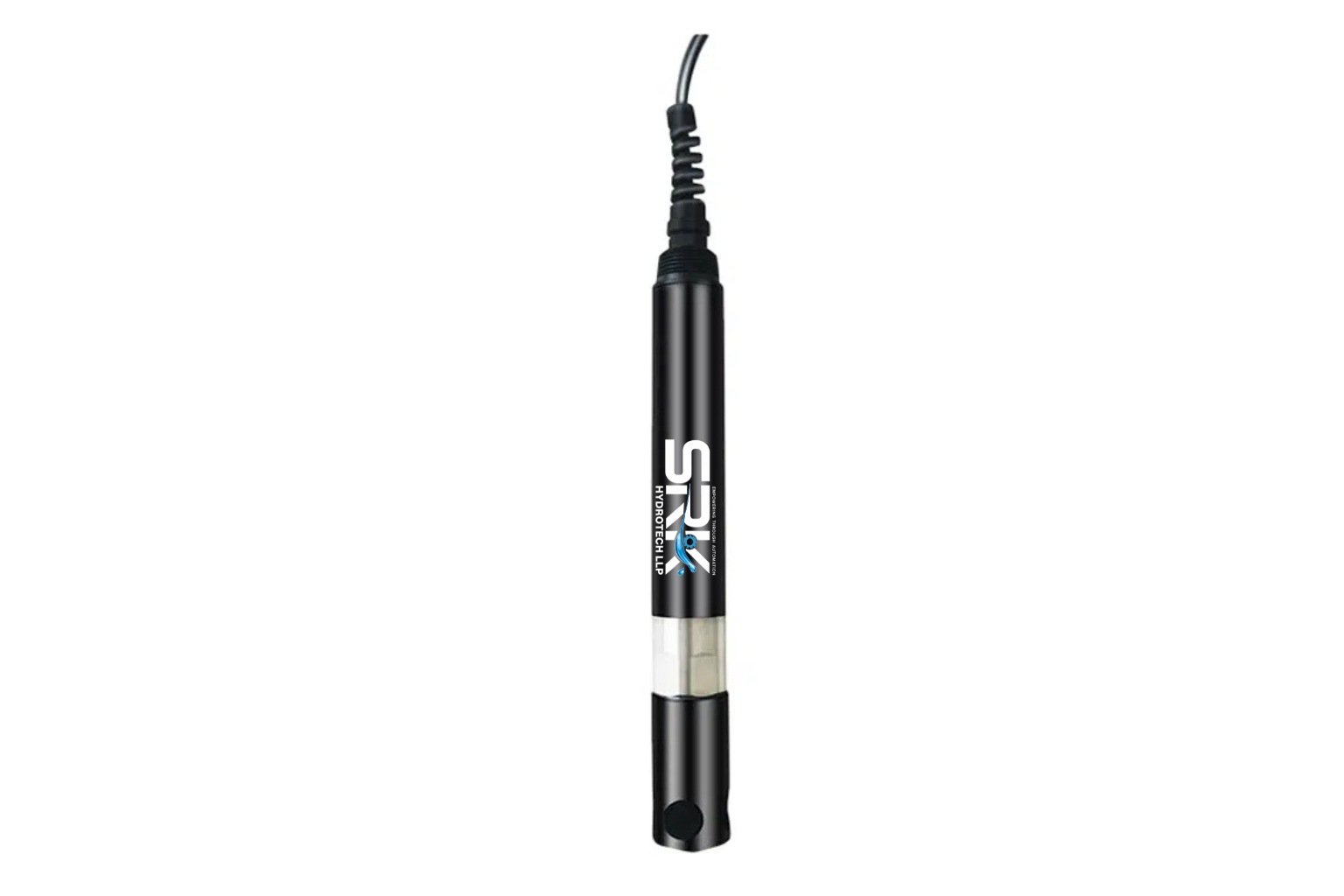
Online Ammonia Nitrogen Sensor
Ammonia & Ammonium Water Sensor
The ammonium water sensor is an ion-selective electrode (ISE) that measures charged ammonium ions in water. With additional calculation, the sensor can also determine the ammonia concentration present in the sample.
The working principle of the ammonium ion-selective electrode is based on diffusion potential. When the ISE comes into contact with the solution being measured, ammonium ions preferentially pass through the selective membrane into the internal electrolyte, due to the membrane's high selectivity for ammonium ions. Because the concentration of ammonium ions differs on either side of the membrane, a potential difference — the diffusion potential — is generated. This potential has a logarithmic relationship with the concentration of ammonium ions in the solution, allowing the sensor to quantify ammonium concentration by measuring that potential.
Applications
- Water Quality Analysis: Determination of ammonium ion content in surface water, groundwater, wastewater, and other water bodies.
- Soil Analysis: Determination of ammonium and nitrogen content in soil.
- Food Analysis: Determination of ammonium content in food.
- Biochemical Research: Used for studying the metabolic processes of ammonium ions in living organisms.
- Industrial Production: Used to monitor the concentration of ammonium ions during industrial production processes.