
- info@rkwaters.com
- Plot No. L-2122, Road No. 52, GIDC Sachin, Surat - 394230, Gujarat, India.

Salinity Sensor
Advance Industrial Sensors
How Does a Salinity Sensor Work?
SRK's industrial salinity meters and sensors measure a solution's ability to conduct current between two electrodes. Since current flows through ion transport in a solution, an increase in ion concentration results in a higher conductivity reading.
A salinity sensor actually measures conductance — the reciprocal of resistance — in order to determine the conductivity of the solution. A potential difference is applied across the two probe electrodes in the sensor, generating a current proportional to the solution's conductivity. This current is then converted into a voltage signal.
To prevent complete migration of ions to either electrode, an alternating current (AC) is used. With each cycle of the AC signal, the polarity of the electrodes reverses, which in turn reverses the direction of ion flow. This is a critical feature of salinity sensor design, as it prevents most electrolysis and polarisation from occurring at the electrodes — keeping the measured solution free from contamination and significantly reducing the formation of redox products on the electrode surface.
- Signal Conversion: The sensor converts the measured conductivity signal into a readable value, such as millisiemens per centimetre (mS/cm) or other standard units.
- Temperature Compensation: Since temperature affects a solution's conductivity, most salinity sensors include built-in temperature compensation to ensure accurate, reliable measurements.
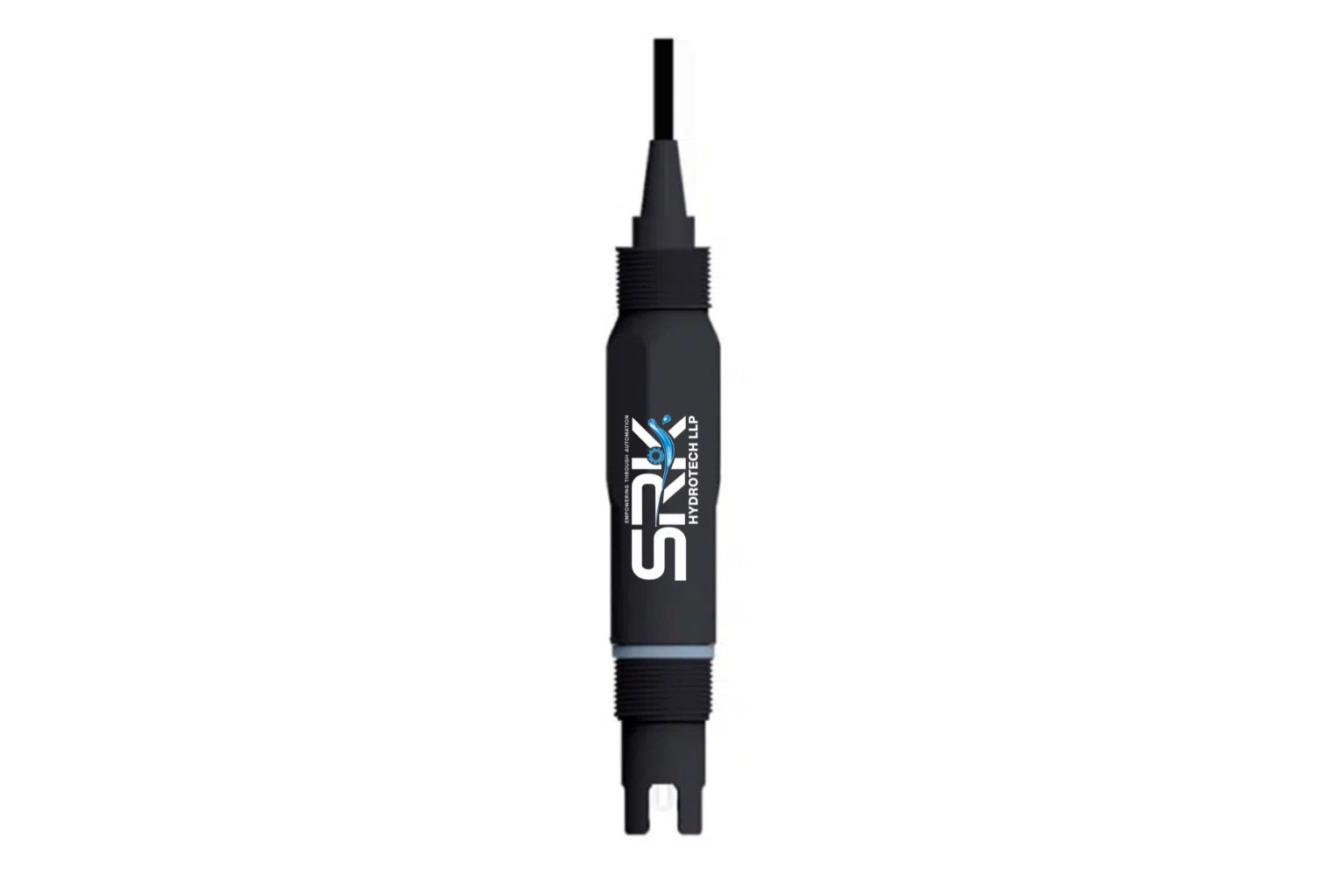
Water Digital Salinity Sensor
Salinity Sensor Types
- Electrode Type: Uses one or more pairs of electrodes to directly measure the solution's conductivity.
- Inductive Type: Uses the principle of electromagnetic induction without direct contact with the solution, making it suitable for corrosive or easily contaminated media.
- Refractive Type: Measures the refractive index of the solution to determine salt concentration, suitable for high-concentration salt solution measurement.